For some reason, it can be hard to find solid information on the largest marathons in the United States.
A few years back, I was looking for a list of the largest races in the country. What I ended up finding was a collection of listicles that mixed different methodologies for counting the field size of races.
Some races, like Philly, include multiple distances. And in some cases the finishers from all distances were counted in the size of the marathon. In other cases, the peak year was used, ignoring the fact that the current race was smaller than it used to be.
So I collected the data for myself, and I’ve assembled a list of the largest marathons in the United States in 2025. This list of the top 25 races is based strictly on the number of finishers in the marathon this year. I did not count finishers at other races, and I did not factor in finisher counts from previous years.
A couple of races stood above the rest – with over 50,000 finishers. A handful more had more than 10,000 finishers. The majority, though, had a few thousand finishers.
Keep reading for the current ranking of the 25 largest marathons in the United States in 2025 – and a table at the end with data for the 50 largest races.
Tier 1: Races With Over 20,000 Finishers
Typically, there are only a handful of races with over 20,000 finishers. This year, though, several races increased in size – putting a half dozen races in this category.
The New York City Marathon is once again the largest race in the country – and the world. This year’s race had a record 59,124 finishers, retaking the title from London. New York is also the race that revolutionized marathoning. The series started in 1970, and for the first few years the number of finishers measured in the hundreds.
But in 1976, the race left Central Park and the new course traversed all five boroughs of the city. Participation exploded, and it paved the way for the sport to become a mass participation event. Today, the race is in high demand, and you’ll have to win the lottery, jump through hoops at NYRR races, or notch an impressive qualifying time to gain entry. But you’ll be rewarded with crowd support and energy that is second to none.
The Chicago Marathon comes in second place with 54,180 finishers this year. America’s second city has a long history of competition with New York, and over the past fifty years this competition has also played out in marathoning. There have been years that Chicago trumped New York, and for a time it was called “America’s Marathon.”
Chicago trails New York in the number of finishers, but it is a faster course. While New York is hilly and demanding, Chicago’s course is flat, fast, and forgiving. The crowds there are also thick, and they’ll carry you like a river as you weave in and out of downtown. If you’re lucky, you’ll even be a part of history. World records are not uncommon here.
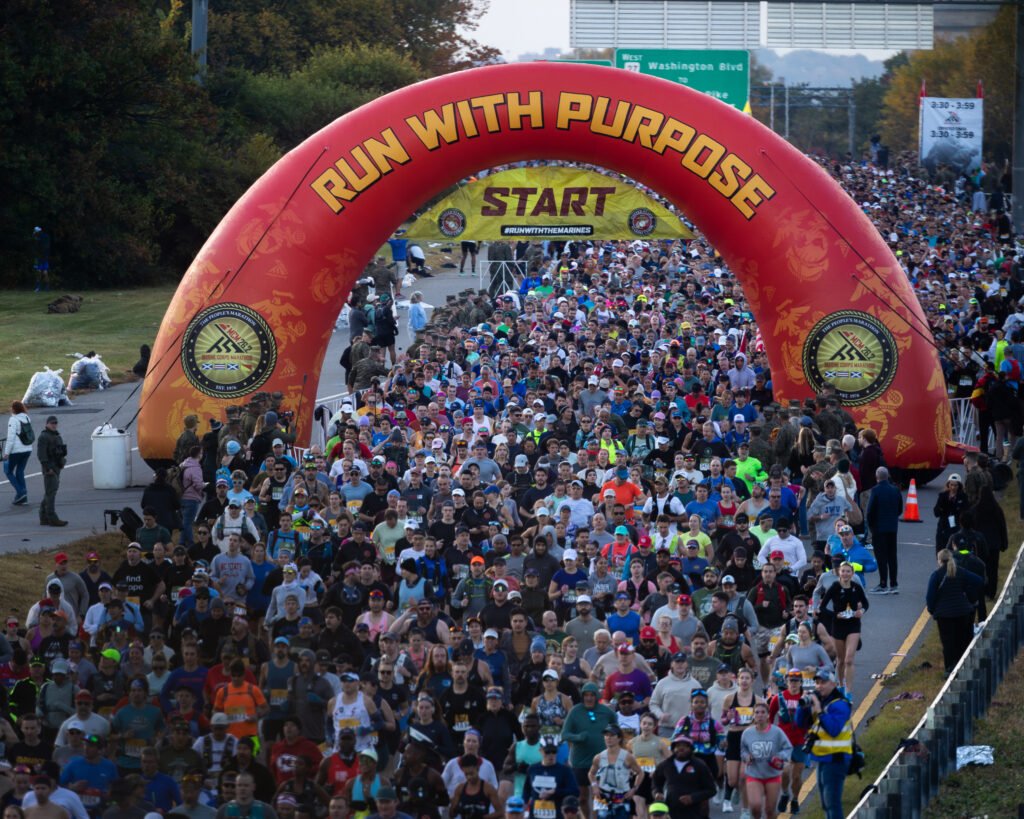
This year’s third largest race is the Marine Corps Marathon. Typically, this race is very popular. But it has never been this big. The 2025 race had just over 30,000 finishers. In previous years, there were between 10,000 and 20,000 finishers, but this was the 50th anniversary of the race.
“The People’s Marathon” is an inspiring tour through the nation’s capital. You’ll pass iconic national monuments, running through history. It’s organized by the U.S. Marine Corps, and it’s known for well disciplined logistics. Although I heard from my friends who ran this year that it was too big for its own good. Hopefully next year, it returns to normal.
Next up is the race that usually comes in third: the Boston Marathon. For years, the field size was fixed at 30,000 registrants and around 26,000 runners finished the race. This year, the field was expanded and there were 28,000 finishers.
Boston may not be the largest race in the country, but it is the oldest race in the world. And in many ways, it’s the most prestigious. The majority of the field earns entry by time qualification, and those who run for a charity have to raise more money than for other races. You can track the potential cutoff time for the Boston Marathon here, but it’ll likely be more difficult than ever to qualify this year.
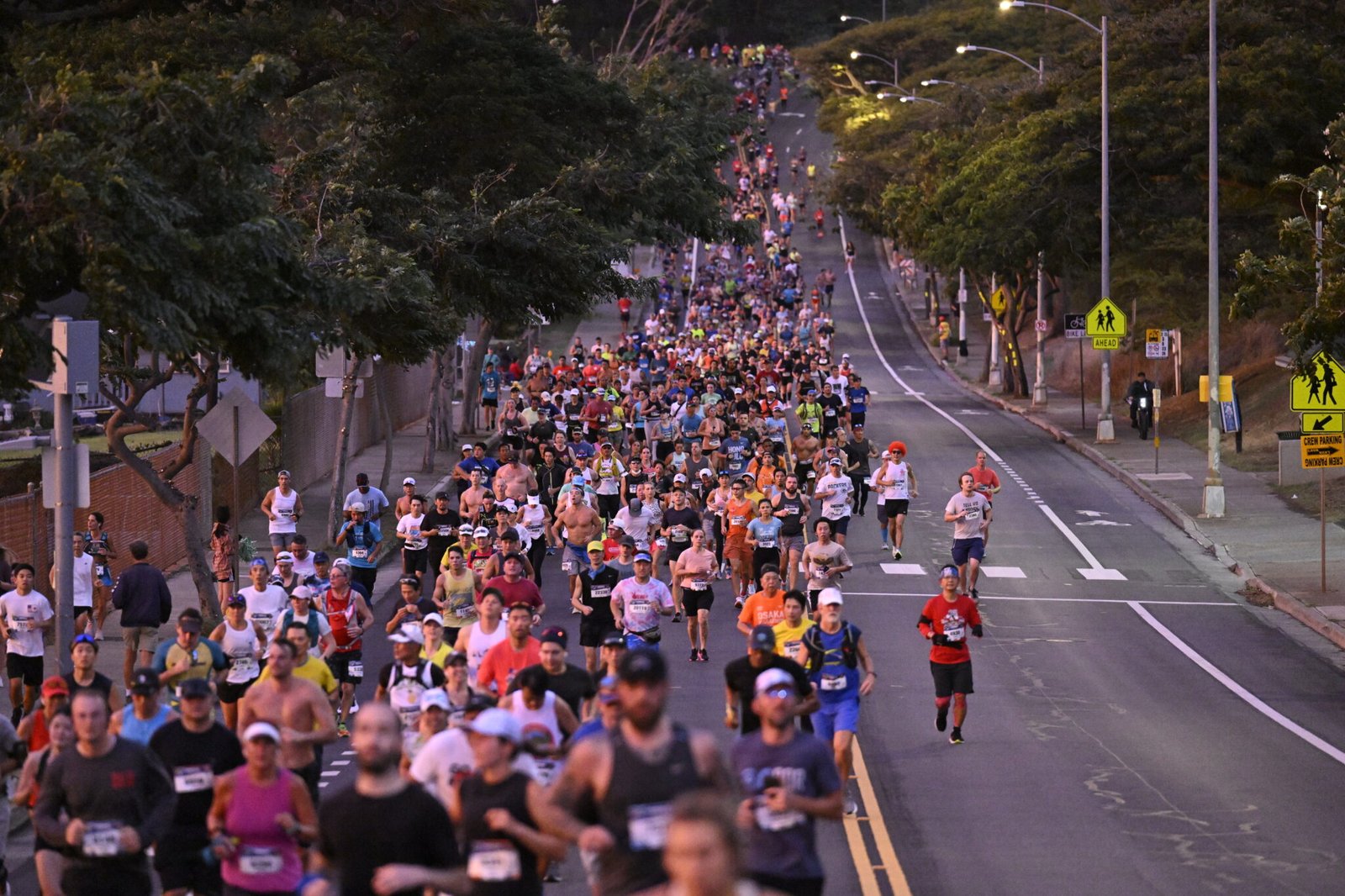
This year’s fifth largest race is the Honolulu Marathon. It broke the 20,000 mark for the first time in a while, with 22,703 finishers this year. It’s a destination race known for stunning views and a relaxed atmosphere. There’s no cut-off time, making it a great choice for first timers and walkers. But it can be quite warm, so don’t pick this race if you’re hoping for a PR.
The final race with more than 20,000 finishers: the Los Angeles Marathon. Like Boston, this race is connected to the Olympics. The race began in 1986, and it was inspired by the 1984 Summer Olympic Games. Like Honolulu, it’s not a particularly fast race and it’s welcoming to first timers. Although it’s always been popular, demand has increased recently. The race sold out in 2024 and 2025, and it’ll likely sell out again in 2026.
Tier 2: Races With Over 10,000 Finishers
This group is smaller than it has been in previous years, in part because the Marine Corps and Honolulu Marathons grew beyond the 20,000 mark.
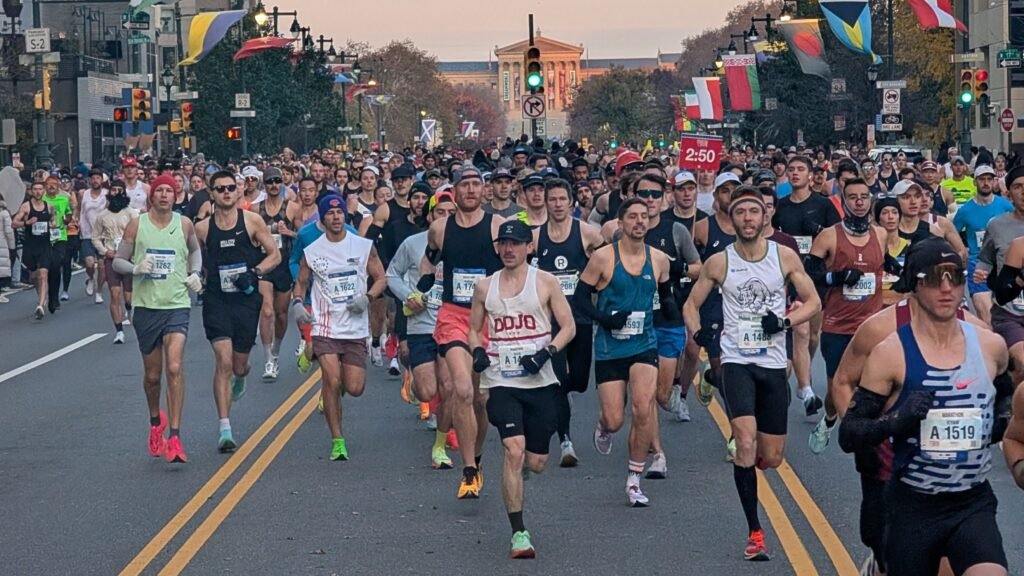
The Philly Marathon comes in #7 with 12,596 finishers this year. That’s a record level for the race, and it sold out earlier than ever. The modern Philly Marathon dates back to 1994, although there’s been a regular race in the city since the 1950’s. The race reached its previous peak back in 2012-2014, but it’s seen a resurgence in the last few years.
This is a fast race that winds through the streets of downtown, passes through Fairmont Park, and goes out and back along the Schuylkill River. The crowds downtown are great, and the atmosphere in Manayunk is a true party. You’ll encounter a few hills in the middle, but it’s not enough to slow you down considerably. The race is the weekend before Thanksgiving, so you can count on good weather – or at least not hot weather.
The other race with over 10,000 finishers is the Disney World Marathon. This year, there were 12,486 finishers – about the same amount as last year. It dropped a spot on the list, surpassed slightly by Philly.
If you’re a Disney fan, this is definitely the race for you. It’s a magical jaunt through the parks. You’ll be there before the parks open, with characters and entertainment along the course. If you live in a cold climate, this is a great excuse for a winter trip down to Orlando. Just know that you’ll wake up super early for a 5:00 AM start. If you’re not crazy about Disney, there are other options out there.
Tier 3: Races with Over 5,000 Finishers
The next tier of races are large, but not huge. They have between 5,000 and 10,000 finishers, and they provide that big city feel without all of the complicated logistics of a massive event.
The California International Marathon – CIM – is known for its fast, downhill course. It had slightly fewer finishers this year (8,174), but it still ranks #9 in the country. Two years ago, it had over 9,000, and it looked like it was on the way to breaking the 10k mark.
It’s a popular choice for people looking to run a fast time – whether that’s a PR, a BQ, or an OTQ. It’s in December, when there aren’t all that many great choices for running fast. But this race combines a friendly course with reliably good weather, and it serves it all up to a field of runners who very competitive.
Another popular winter race is the Houston Marathon, which takes place early in the new year. It grew this year to 7,563 finishers – just shy of its pre-COVID peak of 7,809. This bumped the race up a spot to #10 on this year’s list.
It’s another fast, flat race with a competitive field of runners. If people don’t want to make the trek up to Sacramento, this is the other option for running fast. It also has a blazing fast half marathon the same weekend. This is where Ryan Hall set the men’s American record years ago, and Conner Mantz and Weini Kelati set new American records there this year.
Grandma’s Marathon had just slightly fewer finishers this year (7,542), and it dropped a spot to #11 on the list. It’s in June, a strange time of year for marathons, but it’s far enough north in Duluth, Minnesota that the weather is usually pretty good.
The race runs along the shores of Lake Superior with enthusiastic crowds, and a friendly, welcoming atmosphere. It’s also gotten super popular in recent years – with the 2026 race selling out in a matter of hours.
Next up is the Twin Cities Marathon, with 7,011 finishers. This is a race on the rebound, after being cancelled two years ago due to extreme heat. It’s called “The Most Beautiful Urban Marathon in America,” and despite being in the middle of a major city you’ll spend most of the time in parks, next to lakes, or on beautiful tree-lined boulevards. I ran the race this year, and I loved the course – although I didn’t love the weather.
The Indianapolis Monumental Marathon – or Indy Monumental – climbed the charts to #13 this year with 6,674 finishers. This late fall race is another fast option that showcases the city’s landmarks and downtown. It’s not quite the OTQ factory that CIM is, but it produces its fair share of fast runners. It also continues to grow year over year and continues to sell out earlier and earlier.
The San Francisco Marathon dropped a spot to #14 this year, although its 6,613 finishers was significantly larger than last year. Unlike the last few races, this is not a fast, flat course. It’s known for being hilly and tough. Run this for the experience of crossing the Golden Gate Bridge and for the stunning views of the city – not for a potential PR. It’s also one of the few options for a July race.
The Rock ‘n’ Roll San Diego Marathon is next up on the list (#15, 5,937 finishers). This is the original Rock ‘n’ Roll race, and you’ll have a rockin’ good time with music and entertainment along the course. While most of the other Rock ‘n’ Roll races have gone belly up or downsized, San Diego is still going strong. However, it’s a fraction of the size it was back in its heyday.
Rounding out this group of races is the Austin Marathon. This race jumped in size this year from about 4,000 finishers in 2024 to 5,760 finishers in 2025 – boosting it to the #16 spot. It’s another challenging, hilly course. The race’s lively atmosphere showcases the unique culture of Austin, Texas. It’s also the second Texas race on the list – a good choice if you’re not chasing a PR at Houston.

Tier 4: The Rest
The rest of the list has between 3,000 and 5,000 finishers – smaller, but certainly not small.
The Richmond Marathon had just under 5,000 finishers this year (4,938). This race is known as “America’s Friendliest Marathon,” and you’ll enjoy strong crowd support and a scenic course. It’s a warmer alternative to other popular November races like Philly and Indy, with the Virginia climate offering conditions that are typically cool but more mild.
The Long Beach Marathon is another one that saw rapid growth this year – increasing from 3,463 finishers in 2024 to 4,728 in 2025. That jumped the race from #24 on the list to #18. It’s a flat, scenic course along the Pacific Ocean. Come for the awesome coastal views and stay for the Southern California vibes.
The Flying Pig Marathon in Cincinnati is a unique event. With 4,699 finishers, it ranks #19 this year. It has pig-themed festivities, enthusiastic volunteers, and pumped up crowds. It’s a tough course with rolling hills, and the timing in early May makes the weather unreliable. Pick this one for a good time – not a fast time.
The St. George Marathon comes in #20 this year, with 4,381 finishers. This is a net-downhill course that loses over 2,500 feet of elevation. It also comes with stunning views of the mountains. This used to be the kind of course that runners would flock to to shave off a few extra minutes for a Boston qualifying time. Just be aware that the race now qualifies for the downhill results index, and you’ll need to be an extra five minutes under your qualifying time.
The Columbus Marathon ranks #21 this year, with 4,121 finishers. It’s up a few spots from last year. This is a fast, flat course through Ohio’s capital city. It enjoys great community support and reliably good weather. If you’re looking for a fast time, this is the better choice in Ohio than Flying Pig.
The Every Woman’s Marathon moved down a few spots this year to #22, with 3,851 finishers. The race started in Savannah, Georgia in 2024, and it moved to Scottsdale, Arizona this year. This is a race “for women, by women,” and for a brand new race it has been a huge success. It looks like it’ll be in Scottsdale again in 2026.
The Dallas Marathon is #23, with 3,850 finishers. It’s the third and final Texas race on the list, and it moved up a couple spots from last year. It’s a fairly flat course with some rolling hills, and you’ll pass through the city and around White Rock Lake. This race is in December, so it’s another opportunity to get out of the northern winter and hope for good weather.
The Pittsburgh Marathon is #24, with 3,784 finishers. Despite having slightly more finishers than last year, it dropped two spots from #22. The course is hilly and challenging as it meanders through the “City of Bridges.” Of the two Pennsylvania races on the list, Philly is definitely the one for fast times. But Pittsburgh has its own charm, and it’s a fun city to visit, too.
The Eugene Marathon rounds out the top 25 with 3,772 finishers. It fell just outside the top 25 last year, but it grew by about 20% from 2024 to 2025. This is a fast spring race, and a good option for West Coasters who didn’t make it into Boston. One cool feature of this race is the track finish at Hayward Field.
Honorable Mentions
Here’s the full list of the top 50 races. There are quite a few more medium sized races throughout the country, with a couple thousand finishers. Below the table, I’ve included a few honorable mentions that didn’t quite crack the top 25.
The San Antonio Marathon ranked #27 this year, with over 3,000 finishers. This was the inaugural year for the race, with the old Rock ‘n’ Roll San Antonio shutting down after 2024.
The Phoenix Marathon ranked #39, and it was also a brand new race. The organizers of the successful Mesa Marathon put this on, and it could be even bigger next year.
The Jersey City Marathon is my hometown race. It ranked #31 this year, with just over 3,000 finishers. 2025 was just the third year for this race, and it’s grown each year. I’ll be running it again in 2026, and I’m excited to see what this race is becoming.
Which Race Are You Planning to Run?
There are a ton of great races on this list.
The Majors – New York, Chicago, and Boston – hold a certain appeal, but many people want to cross them off their bucket list. And they’re getting harder and harder to get into.
But there are plenty of other choices – whether you’re looking for something fast, like Indy; something scenic, like Twin Cities; or a party, like Flying Pig. Philly and MCM would be especially good choices for 2026, with this being the 250th anniversary of the United States.
I’m still working on punching my ticket to New York and Boston, and I’ll hopefully be able to run them in 2027. For now, I’m planning to head to Columbus this October and back to Jersey City in April. Someday, I’d also love to run CIM, Big Sur, and Grandma’s.
So many great races, and so little time. Which races do you plan on running this year?
Whatever you’re planning, keep in mind that many of these races are selling out earlier and earlier. So once you’ve made a decision, be sure to register far in advance.
Thanks for posting this. I’ve always been curious to see an actual accurate list.
Thank you. The Flying Pig is always the first Sunday in May, not late May. But it still gets hot, more often than not. Often the Sunday before is beautiful. On another note, I saw the Detroit Free Press Marathon sold out in 6 days!!
Thanks for pointing that out. I think I meant to say “late Spring.” In any case, I changed it now to “early May.”
And I saw that news about Detroit – crazy!