Vladimir Andral knew that something was wrong when he saw the 23 mile marker. His watch said he’d only run 21 miles. “I realized I was misdirected, and I was absolutely crushed.”
Vladimir made a wrong turn at this year’s Seattle Marathon. As a result, he missed a loop and didn’t run two miles of the course, earning himself a DNF. But he wasn’t alone – at least 100 other runners suffered the same fate.
There were also some irregularities at the half marathon, with some runners complaining that they were directed to run out and back past a cone that wasn’t actually part of the course. This comes a year after the lead group in the Seattle Marathon made a wrong turn, causing them to run further than usual.
These kinds of issues aren’t unique to Seattle. At this year’s Toronto Waterfront Marathon, three of the elite runners missed the split from the half marathon and ended up ruining their race. But these problems always result in a mix of heartache, rage, and confusion.
Another misdirected runner, Anna, said she felt “devastated and embarrassed by the results of the race.” At the finish, she went to the results table and was told they couldn’t do anything about her DNF. In the days that followed, she hesitated to contact the organizers, because what could they do to remedy the situation, anyway?
So what happened at the 2025 Seattle Marathon – what went wrong and is the Seattle Marathon Association doing anything about it? Let’s dig in and find out.
What Happened At the 2025 Seattle Marathon?
This year’s Seattle Marathon featured a new course. One part of that new course was a loop in the Magnolia neighborhood, starting around the 19 mile mark.
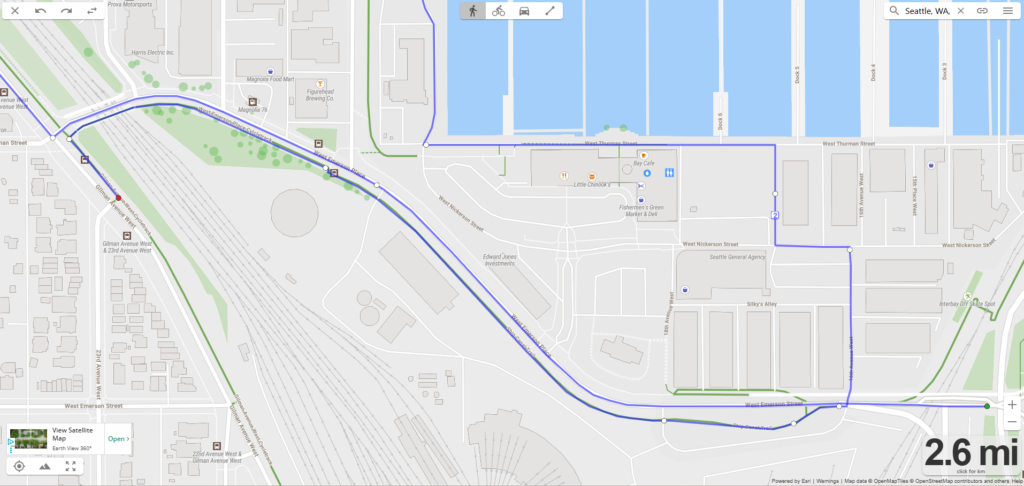
Runners merged onto West Emerson Street, heading west. On that first loop, they were supposed to turn right at Gilman Ave. That would take them on a two mile loop along the water, back under Emerson Street, and onto a trail that runs parallel to Emerson Street. That trail eventually turned into a bike lane, and the second time they approached Gilman Ave they were supposed to turn left.
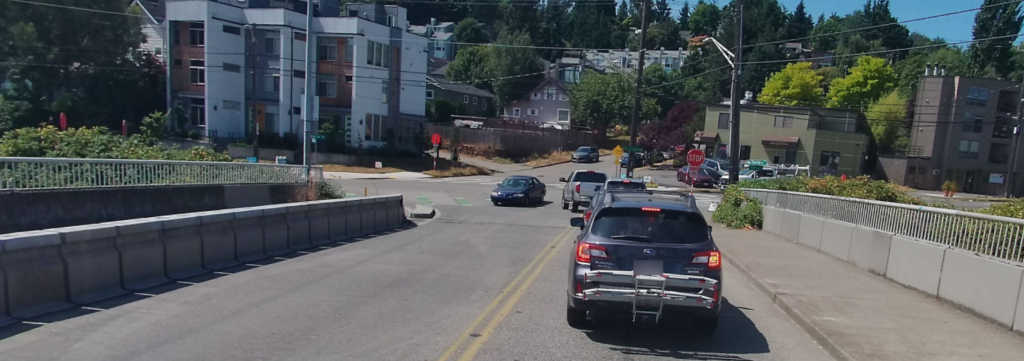
Just over 100 runners at the 2025 Seattle Marathon approached this intersection and turned left – instead of right. The stories varied, but multiple runners claim to have been incorrectly directed to take a left turn. As a result, they missed two miles of the course. They continued to the finish line, having only completed about 24 miles, and they were rewarded with a DNF.
Who Took A Wrong Turn And DNF’ed?
There was a popular thread on Reddit discussing the issue, and some of the comments amounted to, “Rookie mistake.” Because a seasoned marathoner would study the course map ahead of time and know where to turn, right?
If this was something that only impacted new, inexperienced runners, it might be easier to write it off. But this problem didn’t just impact novices.
I reached out to about a dozen runners who ended up with a DNF. Of the six that I got in touch with, three of them were indeed first time marathoners.
But Anna, a woman in her twenties, was on her second marathon. She’s been running for a year and a half. Vladimir, a man in his 50’s, ran the Seattle Marathon last year. He was on pace for a 3:35, which is very much above average for his age group. Another runner was an experienced racer who had done Seattle multiple times.
I collected the results last week, and there were just over 100 runners who had results that fit this scenario. I identified 108 runners who a) registered a split at Mile 19.20, b) registered their next split at Mile 22, and c) were marked a DNF. There were a half dozen other runners who had similar issues but didn’t quite fit that profile, so I excluded them.
The visual below shows the demographic breakdown of the runners who made a wrong turn and compares it to the breakdown of the entire field of starters at the race. Not shown here is the overall gender split – which was similar (approximately 70% men) for both groups.
The breakdown is pretty similar. The group that ran a short course had slightly fewer runners under 40 and slightly more runners in their 40’s. But in general, the two groups have a similar range of ages.
If this were indeed a rookie mistake that only impacted new runners, you’d expect the short course group to be primarily younger runners. But instead you have a fairly representative cross section of the race.
I took the same group of runners and I plotted their split at Mile 19 – just before the missed turn. The visual below groups them into 5 minute increments (i.e. 2:15:00 to 2:19:59).
Although there are a couple clusters here, the runners were spread throughout the field. Everyone left of the 2:55 bar had a projected finish time under 4:00. About half of them – through the 3:15 bar – had a projected finish time of under 4:30. This is a diverse group of runners with varying levels of ability.
That lone bar all the way to the left? That’s Blake Hilty. He came through Mile 19 at 1:52 and he was on his way to a ~2:36 marathon when he made a wrong turn. He’s logged close to 4,000 miles on Strava this year – so definitely not what you would call a novice.
So this was definitely not just a rookie mistake. A diverse group of runners made this same wrong turn – which suggests there was something confusing about the course.
How Did Things Go Wrong?
If you read the course certification paperwork, things are fairly straightforward. In the road restrictions area, there are two relevant restrictions noted:
- Emerson – Runners west in Eastbound Lane (first loop)
- Ship Canal Trail / Bike Lane – After completing Magnolia Loop (after mile 21) runners on trail only
If those two lanes of traffic had been fully and clearly separated, there probably wouldn’t have been as many issues. According to Jared Loranger, the Course Director for the Seattle Marathon, this division was marked with cones at the intersection with 16th Ave West, and later on runners merged into a bike lane that was protected by semi-permanent bollards.
But for about a quarter mile, the paved trail on the left was separated from the road by nothing more than a stretch of grass. The picture below is from the intersection at 19th Avenue. On the first loop, runners are supposed to be in the left lane of the street. On the second loop, they’re supposed to be on the trail.
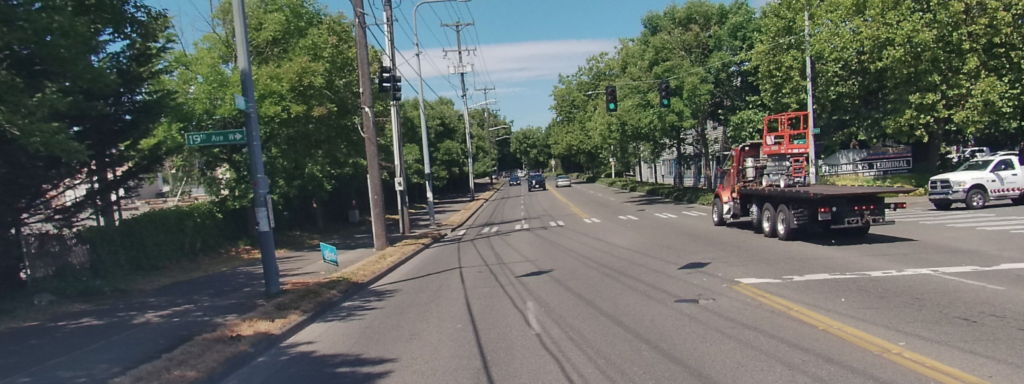
One of the runners I spoke with specifically remembered getting to Emerson, seeing traffic in the westbound lane, and thinking that they should move over off the road. They saw a cone at the 16th Ave intersection, but there was no barricade, so they didn’t think anything of hopping over to the path. Another runner, Brogan, also remembered being to the far left by the time he got to the split in the course.
Running on this trail would put a runner in the bike lane when they got to the split in the course. Typically, runners in the bike lane are supposed to turn left. This would explain why multiple runners said they were wrongly directed by a volunteer to turn left.
At the intersection with Gilman, there were two signs posted pointing to the left and to the right. However, the signs did not clearly state who should go in which direction. There were no other signs leading up to this intersection, and this added another layer of confusion. One runner I spoke with had his headphones in, so without clear signage he had no of knowing which way to go – other than follow the people in front of him.
What Is Seattle Marathon Association Doing About It?
When I spoke with Jared, he admitted right off the bat that something was clearly wrong. When the SMA saw the results, they had ten times the usual number of DNF’s. That doesn’t just happen by accident.
He said they’d reflected on the problems with this area of the course, and there were some easy fixes to improve things moving forward: adding details to the directional signs so runners can more easily figure out which way to turn; adding additional signage leading up to the intersection; and having more volunteers available to direct traffic.
They were also trying to make things right for the impacted runners. They created a new category of results to reflect the short course results and project an estimated finish time. Impacted runners were moved out of the main results set, and they were no longer marked as a DNF. Runners were also to receive a discount code for next year’s Seattle Marathon.
For some runners, simply expunging the DNF from their record may be a meaningful solution. One runner said their goal was to PR, and since their projected finish time was a PR, they were happy with that. Another runner’s chief complaint was that this was their first marathon, and they had no valid results to show their friends. Now they do (kind of).
But for a runner like Vladimir, this is likely little consolation. “I’m 52 with a busy life,” he said,” so it was a major commitment in time and effort. It’s hard to express the frustration of realizing that my race was wasted and I wouldn’t get a valid time.” A handful of runners were on pace to qualify for Boston, and a short course result is of no use to them.
The good news, though, is that next year’s Seattle Marathon shouldn’t have this problem. The current course included multiple compromises, like the loop in Magnolia, as a result of the construction taking place to prepare for the FIFA World Cup. Jared said that once that construction is complete, they’ll be able to put together a much better course next year – eliminating the loop, moving more of the race to trails, and reducing the amount of time runners spend on the roads or near traffic.
Would You Run Seattle in 2026?
This stretch of the course was clearly problematic. About 4% of the starters took a wrong turn and ended up running a short course. This was not simply a rookie mistake, and the impacted runners represented a broad spectrum of experience and ability.
The course makes perfect sense on paper, but it lacked clear markings and dividers to enforce the road restrictions. If there had been temporary bollards with caution tape or metal barricades along that stretch of Emerson Street, there likely would have been few if any issues.
On the flip side, 96% of the field did make the right turn. Many runners reported enjoying the new, flatter course. The race was significantly larger this year than last, and Jared said the Seattle Marathon Association hopes to build on that momentum with an even better course next year.
One runner I spoke with said that he had made the Seattle Marathon a Thanksgiving tradition. But after this year, he’s wary to sign up for another SMA event. He’ll likely sit out next year and wait to see if things are actually better. He’s not the only person I talked to that had some doubts about the future.
If you ran the 2025 Seattle Marathon, what was your experience like? And what do you think it’ll take for the race to improve in 2026 and beyond?
When I ran my first marathon in 2000, i checked my split every mile. At mile 21 I looked at my watch and I was WAY slower than my previous splits and was now off my desired pace. (i was trying to eek into Boston). It really sent me in a tailspin. My next mile was a lot faster, and I was able to recompose. It turns out that that particular mile marker was put in the wrong place (about mile 21.1), while the 22 mile marker was in the correct spot. No harm no foul? Not really, at that point it is hugely mental.
I can’t imagine how this can happen at a big city marathon! I really feel for the runners who went through this completely unnecessary screwup. (No one should be blaming them for not knowing the course!).
I think counting just the DNFs does not capture the full impact. I was running the half marathon (my very first) and I made a different – but related – mistake: I did that loop TWICE, which didn’t disqualify my time, but added ~19 mins to my 8th mile split https://www.brooksee.com/sea/results?pk=8480561.
There was a volunteer at the junction telling runners to go right if it was there first time and left if it was their second, there was nothing memorable about that junction so I had forgotten being there already and I went right again.
I was rather bummed out when I realized what happened, yes I will study the course more carefully next time, but I also hope the organizers find a more robust solution for next year.
Worst-organized marathon/half event I’ve ever experienced. I ran the half, mid-pack with a time of 2:02. This is probably my 15th Seattle half. Best one was my first, on Burke Gilman from Gasworks in 1992. I love the tradition but in recent years the race has deteriorated. This time took the cake, from way-too-loud start-line announcing to course confusion, extended bottlenecks, and risky conditions (one person in front of me bit it on a tall curb during a very tight bottleneck just after the course turned south on Elliot Bay, causing a small pile up that could have been worse). The end was the worst- a dangerous, claustrophobic cluster-F where it was impossible to meet up with anyone who made the mistake to come cheer. Seattle, we can do better! Take some notes from Vancouver, Victoria or Eugene, all of which host amazing marathon events.