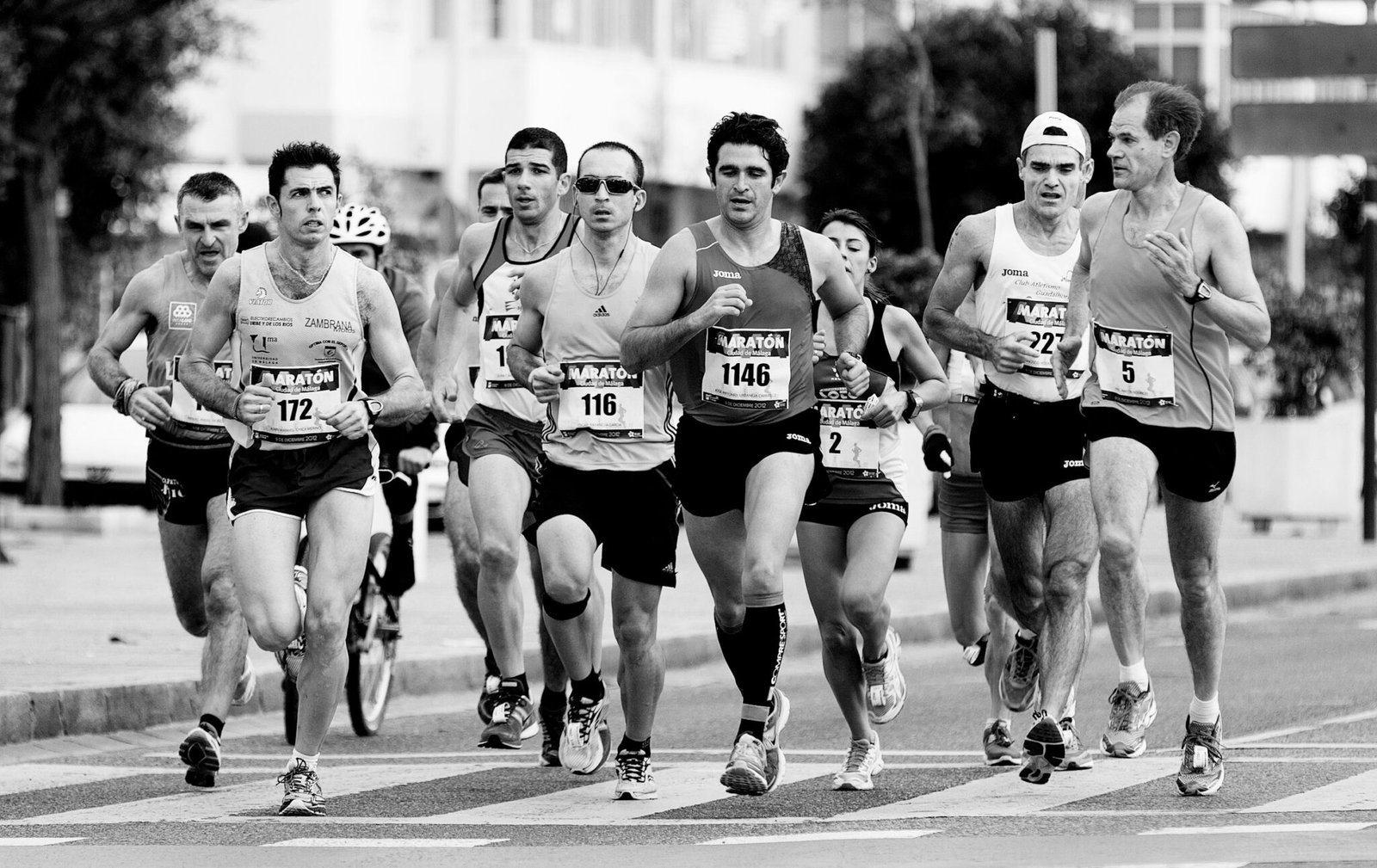
Last weekend was the 2025 Valencia Marathon. In the last few years, it has grown to be one of the largest races in the world. It’s not a Major, but it’s on the same level, and it competes with Berlin and Chicago for the title of the fastest marathon.
It hasn’t yet produced a world record. But it was home to Kelvin Kiptum’s breakout performance in 2022 (2:01:53). The following year, Sisay Lemma won in 2:01:48. In 2023, Sabastian Sawe’s 2:02:05 victory was the best time in the world. And on the women’s side, things have also been quick – with Joyciline Jepkosgei (2:14:00) and Peres Jepchirchir (2:14:43) notching the two best times in the world this year.
Valencia does have one legitimate claim to fame, though. Each of the last two years, there have been over 5,000 sub-3:00 finishers at the Valencia Marathon – more than any other race. Did this year’s race continue that trend?
The race has been growing the past few years, and that growth has been supercharged since COVID. This hasn’t happened without complaints, though. Some locals have complained that the larger, flashier race is becoming increasingly dominated by foreign runners. Did that continue in 2025?
Finally, the race is conspicuously male dominated. Even in the world of European marathons – which tend to lean more heavily towards men than American ones – Valencia has had a particularly low percentage of women participating. Is that changing?
Let’s take a look at the data from the 2025 Valencia Marathon and find out.
How the Valencia Marathon Demographics Have Changed
This year was the largest race in Valencia’s history with over 30,000 finishers. It’s grown rapidly in the last few years. The number of finishers was closer to 20,000 before COVID, and in just the last two years it’s increased to 26,000 and 28,000.
Next year’s race will have 35,000 bibs available – the same as this year. So it’s unlikely that it’ll get significantly larger (for now).
As the race has grown, has it also changed?
Historically, Valencia has had a very high proportion of men in the field. In 2014, the field was 89% male. By 2019, that had shifted to 81%. The visual below shows the number of men and women in the field at the 2023 and 2025 Valencia Marathons.
As the race has gotten bigger, it has continued to shift more towards women – ever so slightly. In 2023, the field was 79% male. This year, the number ticked down to just 76%.
So field is relatively much more balanced than it was ten years ago. But it’s still incredibly male dominant.
At this point, it’s about on par with the Tokyo Marathon – which has the lowest proportion of women of any of the Majors.
We’ll dig into this dynamic more in a bit. But for now, let’s look at how the age of the runners is changing.
The visual below shows the relative size of each age group. Note that runners were only identified by their age group in the results. All runners in the “Senior” category are assigned here the 30-34 age group, while the two younger age groups were combined to form the 20-24 age group.
The visual is broken out by gender, and it shows the percent of finishers in that gender in each age group.
Among both men and women, there has been a shift in the last couple of years towards more younger runners. This is similar to the recent trend seen in American races after COVID.
There were slight increases among runners in their early 20’s and in their late 30’s. But the biggest difference came in the “Senior” category – 23-34. The share of women in this category increased from 31% to 37% and the share of men increased from 24.5% to 30.2%.
The actual number of runners in the 40-44 age group increased. But as the field increased, there was disproportionate growth among the younger runners – and the relative size of this age group did shrink slightly.
The older age groups all shrank in relative size. The late 40’s and early 50’s age groups saw the biggest decline. Men 45-49 dropped from 17.5% to 14.2% – which represents an actual decrease of about 300 runners (8%) from 2023.
So in general, the race is getting younger – with concentrated growth among the age groups under 40 and a hollowing out of the late 40’s and early 50’s.
Is Valencia Getting Taken Over By Foreigners?
It’s a familiar complaint about local races that increase in popularity and start to cultivate a space on the international stage. Sydney is going through this right now as it transitions to being a Major, and Berlin and Tokyo have also shifted to include a much greater share of international runners in the last few years.
Ten years ago, the majority of the field was Spanish – with a large international component filling things out. In 2017, for example, 66% of the 16,000 finishers were from Spain. About five hundred each came from France and the UK. Less than 50 were from the United States.
What do things look like today? The visual below shows the distribution of runners in 2023 and in 2025. It calls out the top ten countries, and then it lumps everyone else into “OTH” for “Other.”
Spain no longer makes up a majority of the field – in either year. And its share of runners is shrinking further. This year, about 30% of the field was Spanish. Another 14% came from France – up from about 3% a decade ago. Great Britain made up another 9% this year – also at 3% a decade ago.
Although the top ten countries haven’t changed in the last two years, the share of runners from other countries has increased significantly – from 16% to 24%.
It is still very much a European race, though. Nine of the top ten countries are European – Mexico is the one exception. Many of the remaining top twenty five countries are also European, along with some Latin American countries (Brazil, Colombia, Costa Rica). Only 378 of this year’s finishers were from the United States.
This shift in where runners are from helps explain why the gender distribution of the race is changing.
When you focus just on the Spanish runners, the race still leans very heavily towards men. Year to year, there’s not much difference. This year and back in 2023, about 85% of Spanish runners were men.
Among international runners, though, that distribution is closer to a 75-25 split. So as more international runners join the race, it increases the overall share of women in the field.
The age difference is less stark, but there is still a difference between Spanish runners and international runners.
Among international runners, about half of the runners are under 40. This increased slightly from 2023 to 2025, but it didn’t change dramatically.
Among Spanish runners, only 34% of finishers were under 40 in 2023. This rose to 43% in 2025 – so participation among younger runners is on the upswing. But it’s still much lower than for international runners.
This is, interestingly, different from international runners who travel to the United States for a big race. At Chicago, for example, the age distribution of American runners is tilted heavily towards runners under 40 – and the distribution of international runners is tilted the other way.
How Many People Ran Sub-3:00 Marathons?
If there’s one thing Valencia is known for – it’s running fast.
There are some things that make Valencia faster than other races. It has a flat, fast course. It also typically has good weather – although I saw some people complaining about how warm it was this year.
But it’s not the only flat, fast course with good weather. Nonetheless, it is the only race that has ever had more than 5,000 sub-3:00 finishers – more than the best years at Boston, Berlin, and Chicago. And if you compare the rate of runners going sub-3:00, it’s higher than any other medium or large race that I could find.
Frankly, what seems to be so special about Valencia is that fast runners choose it – overwhelmingly.
How did they do this year? The visual below starts with the total number of runners, broken out by gender, who went sub-3:00.
In total, over 5,800 runners finished under three hours this year. That far exceeds the previous peak of around 5,200 from 2023.
The bulk of that increase comes on the men’s side. This year, the men alone had over 5,000 sub-3:00 finishers for the first time. The total increased over 10% from last year.
But on the women’s side, there’s also been an increase. The overall numbers are smaller – but 333 is quite a few women running sub-3:00 in a given race. Chicago ’25, Boston ’25, and Berlin ’24 all had slightly more women go sub-3:00, but not by much. They also had significantly more women in their fields.
To put this in perspective, of the women under 45 at Valencia, 6.0% of them finished under three hours. This is higher than Boston (5.0% in 2025). There’s only one other major race I’ve found with a higher rate of women running sub-3:00, but you can read more about that here.
The visual above zeroes in on the men, specifically the 30-34, 35-39, and 40-44 age groups. These make up a substantial part of the field, and they’re also the most likely to be capable of finishing under three hours.
Among the younger two age groups, over 30% finish under three hours. When you get to the early 40’s, that drops a bit. But it’s still 27-28%.
Looking across the last three years, there isn’t a ton of difference. 2023 was the best year, but not by much. Notably, there is no significant difference from last year to this year. In fact the rates are slightly higher for two age groups. This year was slightly warmer than usual – especially later in the day. But looking at the data, there’s no evidence that it had much negative impact on these faster runners who beat the heat of the afternoon.
Given that the rate of sub-3:00 finishes is similar to previous years, the most logical explanation for why it increased so much this year is that the underlying demographics changed. A larger proportion of the field was men in their 20’s and 30’s – increasing the overall rate of sub-3:00 finishes across the entire field.
Across the board, 30% of men under 45 ran under three hours at Valencia this year. The only race with a higher rate than that is Boston – and most of those men had to run under three hours just to qualify to get in. A typical fast race, like Chicago or Berlin, sees about 15% of its young men go sub-3:00.
Across all races? That rate is less than 10%.
Will Valencia Still Be the King of Sub-3:00 Marathons Next Year?
This was a banner year for Valencia. It was the largest race in Valencia’s history, the two leading women set world’s best times for the year, and a record number of runners finished under three hours. No matter how you cut it – this race was big and it was fast.
But that could all change next year. Last year, the Valencia Marathon sold out all 35,000 bibs in a matter of days. Many races are selling out earlier than usual these days, but this is on another level – similar to the frenzy around Grandma’s in the United States.
Without making any changes, the 2026 Valencia Marathon likely would have sold out in a matter of hours. Instead, the organizers decided to move to a ballot system. Anyone who ran (or was registered to run) this year’s race can sign up during a special registration period – which ends at 10:59 AM Spain time on Monday, December 15.
So if you ran this year and you want to do so again in 2026 … don’t wait. Sign up now.
Everyone else can sign up for the random ballot between December 16 and December 26 (10:59 AM Spain time).
This will likely end up having an impact on the field. Since Valencia appeals to runners who want to run fast, they are the most motivated runners and the ones who would be most likely to get in through a first come, first serve model. But now, other runners will have ten days to decide to join the lottery – and the field will be (relatively) more evenly distributed.
My guess is that next year’s race will still be very fast – but the number and the sheer rate of sub-3:00 finishes will probably decline. It may be that Valencia’s days as the king of the sub-3:00 marathon are numbered.