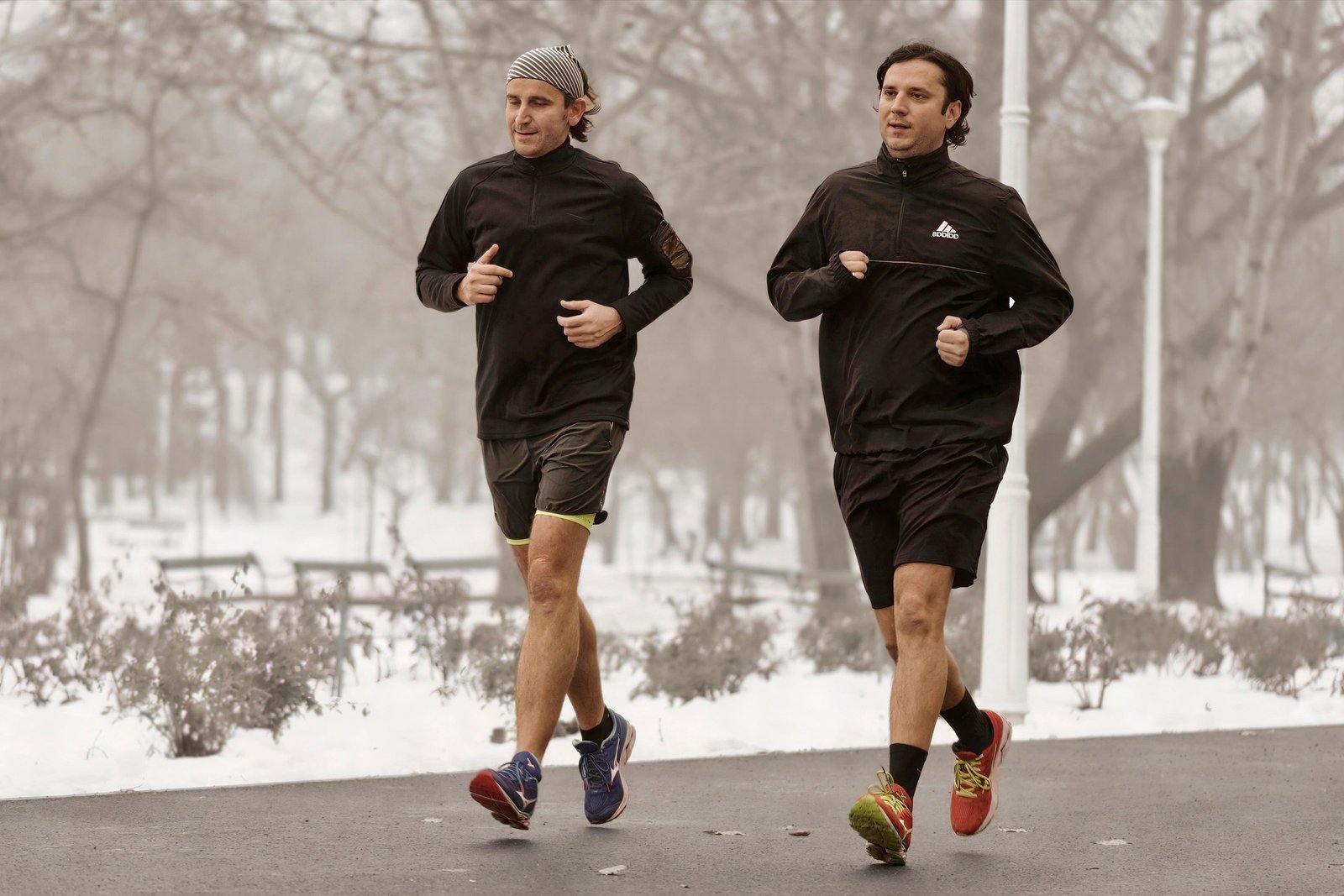
When I was younger, I’ll admit that I was a fair weather runner. I often picked things up in the spring and tapered off in the late fall. This minimized my discomfort – and also severely limited my long term development as a runner.
In the spring of 2020, I got back into running. I methodically and slowly ramped up my mileage. When wintertime came around in late 2020, I made a conscious decision to stay consistent. It paid off, and I was amazed at how much better I felt after twelve months of consistent running.
I was also a bit surprised at how much the cold didn’t bother me. Since I was a kid, I’ve been called a polar bear. So maybe this shouldn’t be surprising. But this year’s winter was tough, even for me. And I was curious to see how the winter of 2025-26 stacked up against previous winters – in New Jersey and in a few other locales throughout the United States.
I used OpenMeteo to gather historical data during winter – defined as December 21 through March 20 – for each year going back to 1980. I grouped the data and summarized it per winter period. So, for example, December 1980 was combined with January, February, and March of 1981.
The full dataset included many different variables, but I’m going to focus on a) the temperature in the morning, b) the temperature in the afternoon, and c) the amount and frequency of snowfall.
When Is It Too Cold to Run?
My uncle lives in Minneapolis and his family is from Norway. He’s a firm believer of the old saying, “There’s no bad weather, just bad clothing.” And if you’re properly prepared for it, there’s rarely a point at which it’s simply too cold to run.
Whether you find conditions tolerable for running, though, may vary. Personally, I prefer to run in shorts. I’ll happily put on gloves, and when the temperature calls for it I’ll put on a long sleeve shirt or layer a bit on top. I dislike tights, and I’ll only wear sweats for a quick warm up before a race.
I’m typically fine with temperatures in the 20’s and 30’s. I can handle the high teens. But once the temperature dips below 15F, I’ll usually consider the treadmill as a viable alternative. It’s not common for temperatures to drop that far in New Jersey, but there was a fairly long stretch of really cold days this winter.
Snow and ice, on the other hand, is more problematic. Running in a light snowfall can be quite serene, and one or two inches of accumulation usually won’t cause problems. Much more than that, and it can be tough going. After significant accumulations, there’s also a chance that sidewalks won’t be shoveled. Add on the chance of ice, and you may want to think twice before heading outside.
This year saw two major storms in New Jersey. The first storm was also combined with frigid temperatures, and conditions were terrible for a week. The second storm was followed by warmer weather, so while the snow hung around for a while the sidewalks weren’t too bad.
How Cold Were the Mornings This Year?
I’m a firm believer in morning runs. Get things out of the way before the day starts – and before your schedule can get knocked off course.
In summer, that’s great. Get up early, get out before the heat of the day. In winter, that’s not so great. Whether you’re up at 5AM or 6AM, the sun probably isn’t up. And temps are at or near their lowest for the day. There will be days when it’s comfortable enough at 10 or 11 AM, but an early morning run is downright frigid.
The visual below shows the distribution of temperatures at 6AM. For each winter, the number of days in each category (i.e. 0-10F, 10-20F) were counted. Then, the number was converted to a percent of the entire season. The bars are sorted from coldest (left) to warmest (right). If you hover over a bar, you’ll see the temperature range and how common it was.
The filter in the top left will toggle between ten different cities from around the country.
I live in West Orange – northern New Jersey. About 30% of mornings were less than 20 degrees. That’s the highest it’s been in over a decade, but it was significantly higher in 2013-14 and 2014-15. Many of the years from 2000 to 2011 were similar, along with the 1980’s. The worst were 93-94 and 2002-03.
If you look at Boston – a little further north – the pattern is fairly similar. It’s a little colder, with slightly more cold days. This year was colder than many recent years, but 2013-14 and 2014-15 were significantly colder. And many other years had a similar share (~40%) of days with a morning temperature under 20F.
Chicago wasn’t quite as bad this year, with 2020-21 and 2021-22 being colder. 2013-14 was still a rough year, with well over 50% of days under 20F. DC is not nearly as cold, but this year was colder than most – matched by 2013-14, 2014-15, 1993-94, and a few other winters.
In Denver, the pattern looks very different. This was the warmest winter. The coldest was 2007-08, which wasn’t a particular outlier in the East Coast and Midwestern cities. In Sacramento, it’s pretty nice all of the time, although this year was warmer than usual with only ~14% of days getting down to the 30’s. Seattle is only slightly cooler, but here too this was one of the warmest winters.
LA is much warmer, but again this year was warmer than usual – with only 1% of days reaching the 30’s. And then there’s West Palm Beach, which I like to include because my wife’s family lives there and it gets disgustingly hot. This year had a higher than usual number of days in the 30’s (~2%), but it was still stereotypically warm. Over 20% of mornings were already 70F at 6AM.
So was this winter colder than usual? On the East Coast and in the Midwest, it does seem like it was on the colder side. But it definitely wasn’t out of the ordinary, with colder winters occurring in several other years. Out west, this year was actually warmer than usual – an indication that weather patterns aren’t consistent across the entire continent.
What About the Afternoon Temperatures?
If you have a job, it’s probably tough to run at 3PM. But some people enjoy the flexibility to do just that. I just came back from a work trip to Annapolis, and I was struck by how many people were out running in the late afternoon. I don’t know if they consciously made the choice to run later in the day, but the weather was better than the early mornings – especially for people not used to colder winters.
The visual below shows the distribution of temperatures at 3PM – using the same breakdown as before.
The pattern looks similar to the morning temperatures, with everything shifted a little warmer. For example, in West Orange about 30% of mornings were below 20F – but only 10% of afternoons were.
Still, this year was on the cooler side of things in West Orange, Boston, Chicago, and DC. Denver and LA were warmer than usual, and Sacramento and Seattle were about typical. West Palm was hot, like usual, with 20% of days reaching the 80’s.
How Much Snow Did We Get?
As I said earlier, snowfall – and the ice afterwards – is more likely to push me inside on the treadmill than cold temperatures. A light snow is fine, but serious accumulations can cause serious issues.
Before we look at the graph below, I’ll say up front that the estimates from Open-Meteo look like they underestimate the amount of snow we got this year. But when I checked some previous years against other sources, it also underestimated those snowfalls.
I couldn’t find another easily obtainable dataset, so I’m going to rely on this one. I’m operating under the assumption that it may underestimate snowfall totals – especially of larger storms – but it should have validity for making comparisons from year to year.
Each bar shows the total number of inches across the entire winter. Again, the filter will toggle between the different cities.
In New Jersey, we did get more snow this year than in most recent years. The last similar year was 2020-21. There were many years in the 2010’s with similar or larger accumulations, and many winters in the 1980’s and 1990’s with less. The biggest standout year was 1993-94.
In Boston, this year had more snow than usual – with 2017-18 being the last year with more snow. There were several other years this century with more snow, and many years in the 1980’s and 90’s with less. DC followed a similar pattern, but with less accumulation overall.
In Chicago, there was less accumulation this year than usual. The last year with less snowfall was 2016-17, and going back 40 years most years had similar or more snow. Same with Denver, although here the last year with less snow was 2008-09.
Seattle doesn’t typically get much snow, and this year was on the money for that. The warmer cities (Sacramento, LA, West Palm) don’t see any significant amount of snow.
In New Jersey, some people were freaking out for these snowstorms. And it was snowier than the last few years. But It certainly wasn’t one of the snowiest winters in my lifetime. I think it’s more likely that we just got used to the mild winters that we’ve had the last few years.
One final visual below counts up the total number of days each winter with 1″ or more of accumulation.
Here, too, there was more snow than average on the East Coast. But it wasn’t a huge outlier. And in Chicago and Denver, there was considerably less snow than usual.
So How Bad Was This Winter for Running?
When I was in the middle of it, it felt terrible. There was a period in late December where it was frigid every morning, and I spent a week straight on the treadmill. Then we got hit with a big snowstorm in January, and everything froze afterwards. Another week on the treadmill.
To give you an idea of how much time I spent on the treadmill this winter, I started re-watching Stranger Things at the beginning of January. I finished the entire series – a total of about 45 hours.
But now that I look at the data, it both confirms that a) the winter near me was colder and snowier than the last few years but b) it was not some crazy outlier. There were colder winters in the past and there were many years with similar or worse snowfall accumulations.
The other interesting finding – when I looked at data from across the country – was that the pattern wasn’t consistent everywhere. The East Coast and Midwest had similar temperature patterns, but the western cities did not. And when it came to snowfall, there was a difference between the East Coast and the Midwest.
It’s always a good idea to zoom out and look at the big picture, because it’s easy to fall into the trap of thinking that a more recent experience was stronger and/or worse than one in the past. It’s also true that this may have been the worst winter that you ran through, if you only got into running recently. But there have been worse years in the past.
How was your winter this year? Did the weather keep you inside or get in the way of your training? Does the data match up with your experience?